Vineyard fertilizer: organic soil amendments and fertilizers
Which fertilizer for vines? An organic amendment after harvest to rebuild soil humus, then an organo-mineral fertilizer at budbreak so that nitrogen is available at flowering. Vines need little nitrogen, 30 to 60 kg per hectare, but they do need a living soil and a good balance between potash and magnesium. That is our method, for organic and conventional vineyards alike.
Updated on by the Germiflor technical team, Aussillon (Tarn, France)
Germiflor products for vineyards
Amendments for autumn, fertilizers for spring: a range designed for vineyard soils, made in the Tarn.
Which product for which situation?
| Plot situation | What it needs | Germiflor product |
|---|---|---|
| Soil low in organic matter, low water reserve | Plant-based amendment with a high ISMO, in autumn | Humiflor® Germi’One®OM 55%, ISMO 59, C/N 19 · Organic, Vegan · 1 to 2 t/ha |
| Tired soil, low biological activity | Plant and animal amendment with a low C/N | Humiflor® Biomazor®OM 61%, ISMO 55, C/N 14 · Organic · 1 to 2 t/ha |
| Planting or replanting | Base amendment, planting mix in the planting hole, then phosphorus for rooting | Germi’One® or Biomazor® at 3 to 5 t/ha, Germiplant® in the planting hole (1 to 2 kg per plant), then AB’Flor® 8-10-2 SGermiplant®: NF U 44-551 growing medium · 8-10-2 approved for organic farming |
| Maintenance of a balanced vine | Organo-mineral fertilizer with magnesium, at budbreak | AB’Flor® 6-4-6 V + 2 MgO SE100% plant-based · Organic, Vegan · incorporate immediately after spreading |
| Lack of vigour confirmed by analysis | Concentrated organic nitrogen, as a targeted application | AB’Flor® 13 NOrganic fertilizer with 13% nitrogen · Organic |
| Quality goal, risk of magnesium deficiency | Fertilizer rich in potash and magnesium | Fructiflor® 4-7-10 SK + 3 MgONPK 4-7-10 + 3 MgO · not approved for organic farming |
Amendment rates are those given for vines on our product sheets. For fertilizers, the rate is calculated from your yield and your soil analysis: our technical team sets it with you. We also make other formulas for vines than those shown on the website: ask us for advice.
 100% Vegan
HUMIFLOR® GERMI’ONE®
Builds stable humus and improves the soil’s water reserve. OM 55%, ISMO 59, C/N 19.
View product sheet
HUMIFLOR® BIOMAZOR®
Revives biological activity in tired soils. NF U 44-051, approved for organic farming.
View product sheet 100% Vegan
AB’FLOR® 6-4-6 V + 2 MgO SE
Gradual nutrition with magnesium, 100% plant-based formula. Approved for organic farming.
View product sheet
FRUCTIFLOR® 4-7-10 SK + 3 MgO
Rich in potash and magnesium, for ripening and grape quality.
View product sheet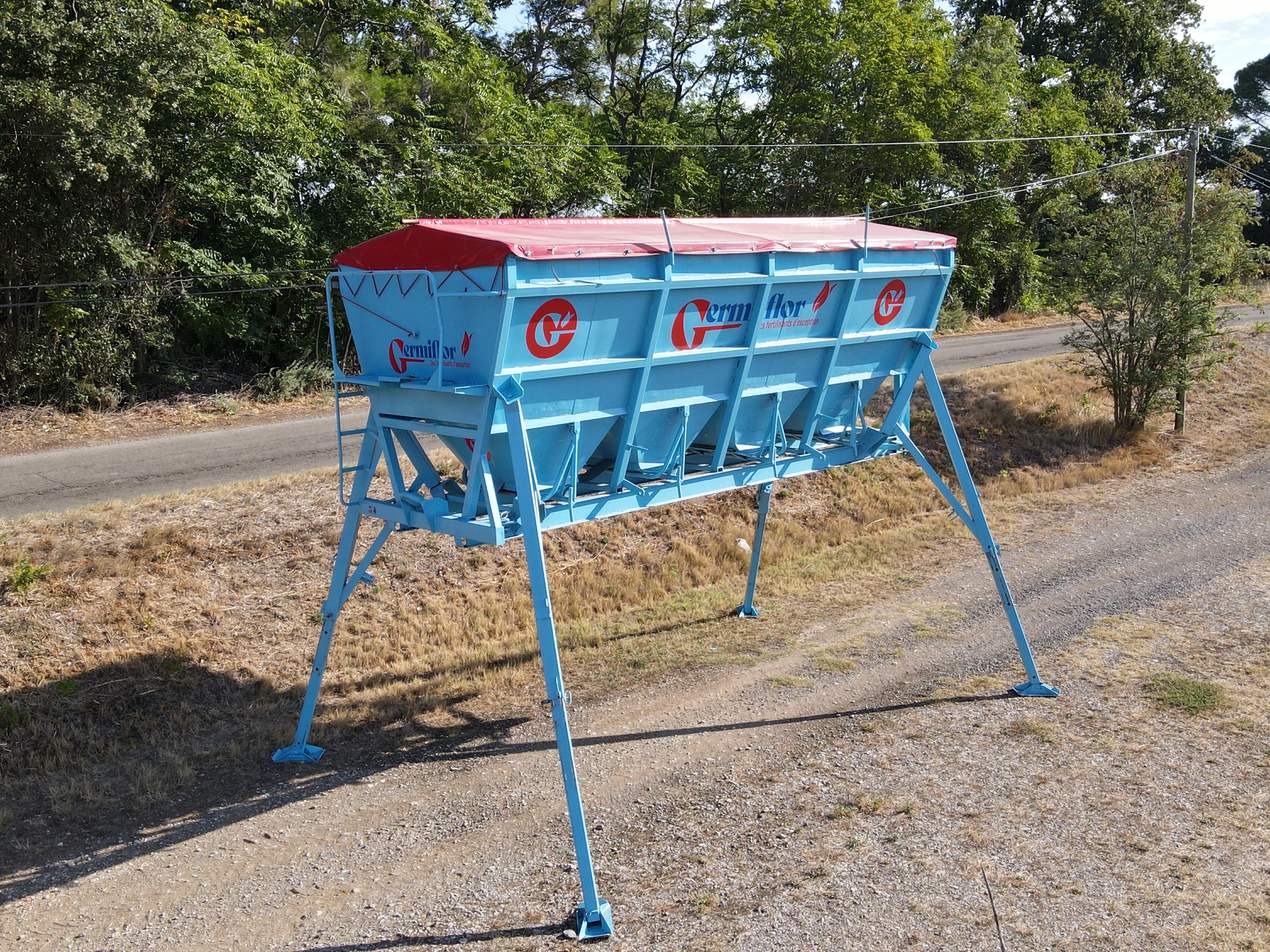
Delivery and equipment
Hoppers and fertilizer spreaders for your vineyards
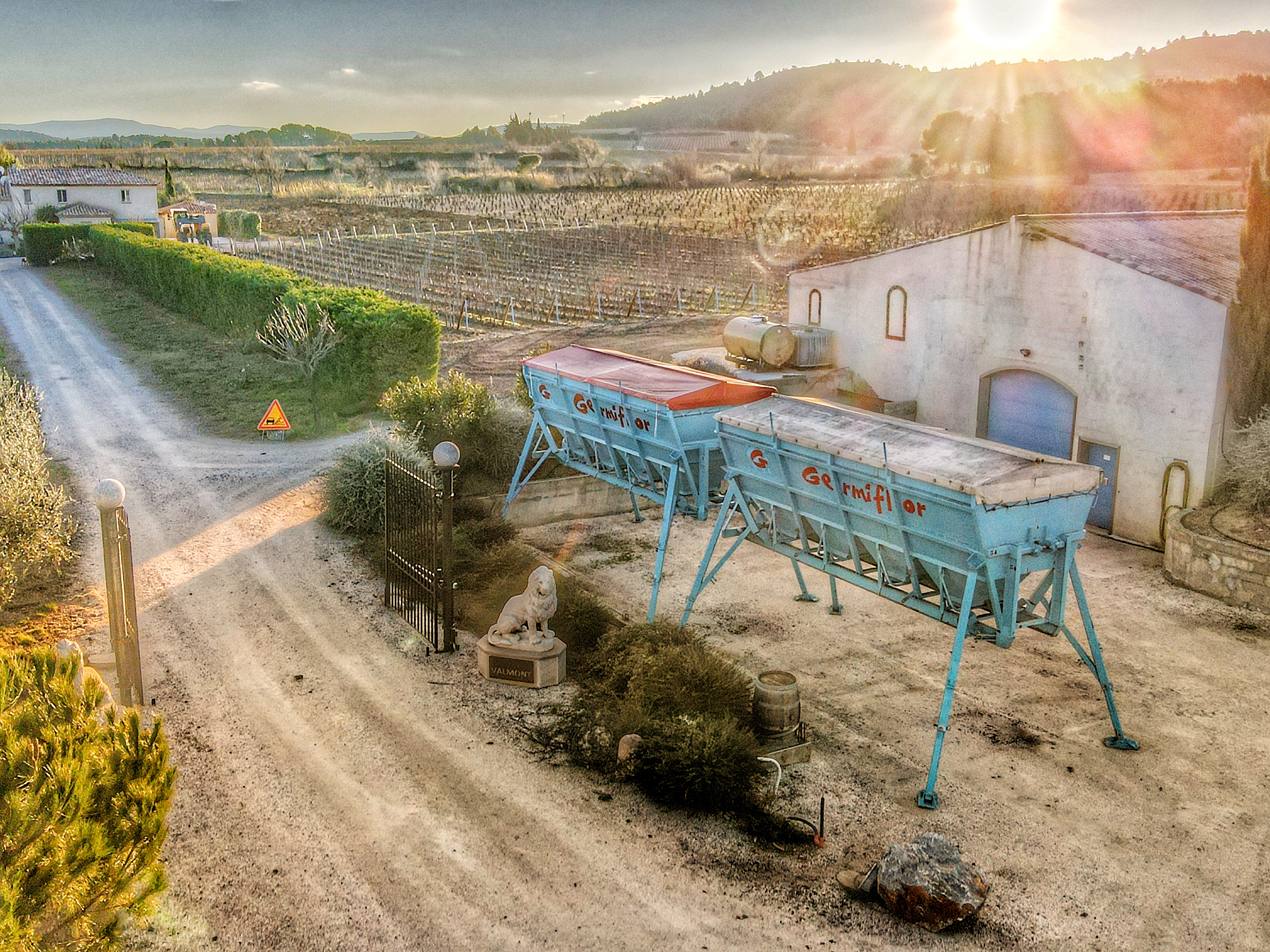
From the south of France up to the Loire Valley, buying our fertilizers comes with equipment on loan, through your distributor or your Germiflor sales representative: a storage hopper installed on your farm and a spreader suited to your rows. The loan applies to all crops, not just vines.
- Storage hopper installed on your farm
- Five spreader models, including localized, double-coulter and inter-row spreaders for vineyard rows
- Loan reserved for purchases of Germiflor fertilizers
Trial 2011-2018 · Limoux (Aude, France)
Eight years of trials, from the vineyard to the glass
At the Flandry estate in Limoux, we compared four treatments in blocks on Chardonnay: no fertilization, mineral fertilizer, Germiflor® organo-mineral fertilizer and composted grape marc, with equal inputs of nitrogen, phosphorus, potash and magnesium. Protocol by the Microhumus consultancy; trial run with Cave Sieur d’Arques, the La Cavale cooperative and the Aude Chamber of Agriculture.
At the tastings of the 2014 and 2016 vintages, wines from the organo-mineral treatment were judged more intense, more persistent and more harmonious. One site, one grape variety, a plot already well fertilized before the trial: these figures describe this trial and do not guarantee a yield.
Germiflor know-how
A manufacturer alongside winegrowers
Our fertilizers come out of our Aussillon plant, made from our own compost, Mazor®. Our technical team sets the rates with you based on your soil analysis and yield target, and we lend storage hoppers and spreaders suited to vineyard rows.
Mazor® at the heart of our formulas
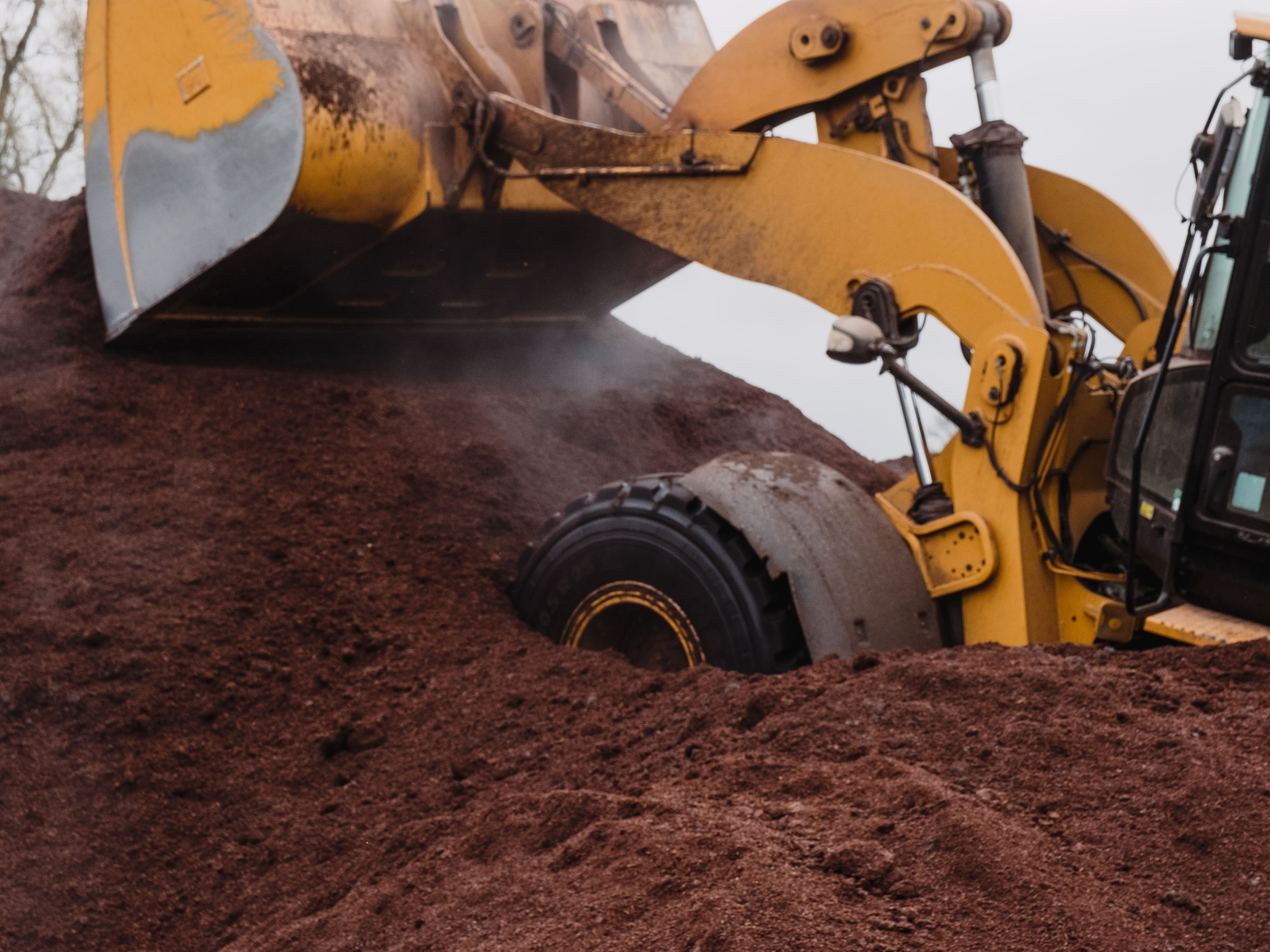
Our amendments and organo-mineral fertilizers are built on Mazor®, the result of seven months of controlled composting with the patented Cronops® process. Plant oilseed cakes, grape and olive pulp, coffee grounds and, depending on the formula, sterilized animal materials are transformed: carbon is stabilized, the C/N ratio falls, pathogens are eliminated and the microflora develops. That is what sets a composted material apart from the same material in its raw state.
Patented Cronops® process · FR2103847
- 7 months of controlled composting
- 1 billion micro-organisms per gram
- The base of our amendments and organo-mineral fertilizers
On video
Mazor® and the Académie des Germis on video
How our compost is made, and the key concepts of fertilization explained by the Germis. All our videos, in French, are on our YouTube channel.


When should you fertilize your vines?
The amendment after harvest, the fertilizer at budbreak, an adjustment before flowering if needed: three steps, always in the same order, timed to the way vines draw on the soil.
- 01Soil supportOctober to mid-DecemberAfter harvest
Organic amendment on well-drained soil, lightly incorporated, to rebuild humus before winter.
- 02NutritionMarch to AprilAround budbreak
Slow-release organo-mineral fertilizer: applied early, it has time to mineralize before flowering, when the vine starts taking up nitrogen from the soil.
- 03AdjustmentsMay to JuneBefore flowering
A second, split application if vigour, observation or analysis justifies it; a foliar fertilizer can correct a one-off deficiency.
Stage by stage: our vine fertilization calendar (in French).
Nitrates Directive: in nitrate vulnerable zones, no fertilizer may be spread on vines from 15 December to 15 January (French national action programme, order of 30 January 2023). Your regional action programme may be stricter: check it before each application.

The Germis’ tip
Before choosing a fertilizer, have your soil analysed. The analysis tells you whether the vine is really short of nitrogen, potash or magnesium, or whether the element is present but locked up: the correction is not the same. If magnesium is in doubt, a petiole analysis at veraison settles the question.
Germi and Germinette, Germiflor’s mascots
What does a vine need?
Vines are a frugal crop. For 6 to 10 tonnes of grapes per hectare, their nitrogen needs are around 30 to 60 kg per hectare per year. A simple rule of thumb: 0.6 kg of nitrogen, 1 kg of potash (K₂O) and 0.3 kg of magnesia (MgO) per hectolitre produced, that is 30, 50 and 15 kg/ha for a yield of 50 hl/ha.
From budbreak to flowering, the vine lives mainly on the reserves stored in its trunk and roots; it then draws on the soil, with peak uptake between flowering and fruit set. What matters is therefore not the amount of fertilizer, but the soil’s ability to supply nutrients at the right time: structure, humus, water reserve and microbial life.
Our method always follows the same order: soil support, nutrition, adjustments.
Why apply an amendment before fertilizer?
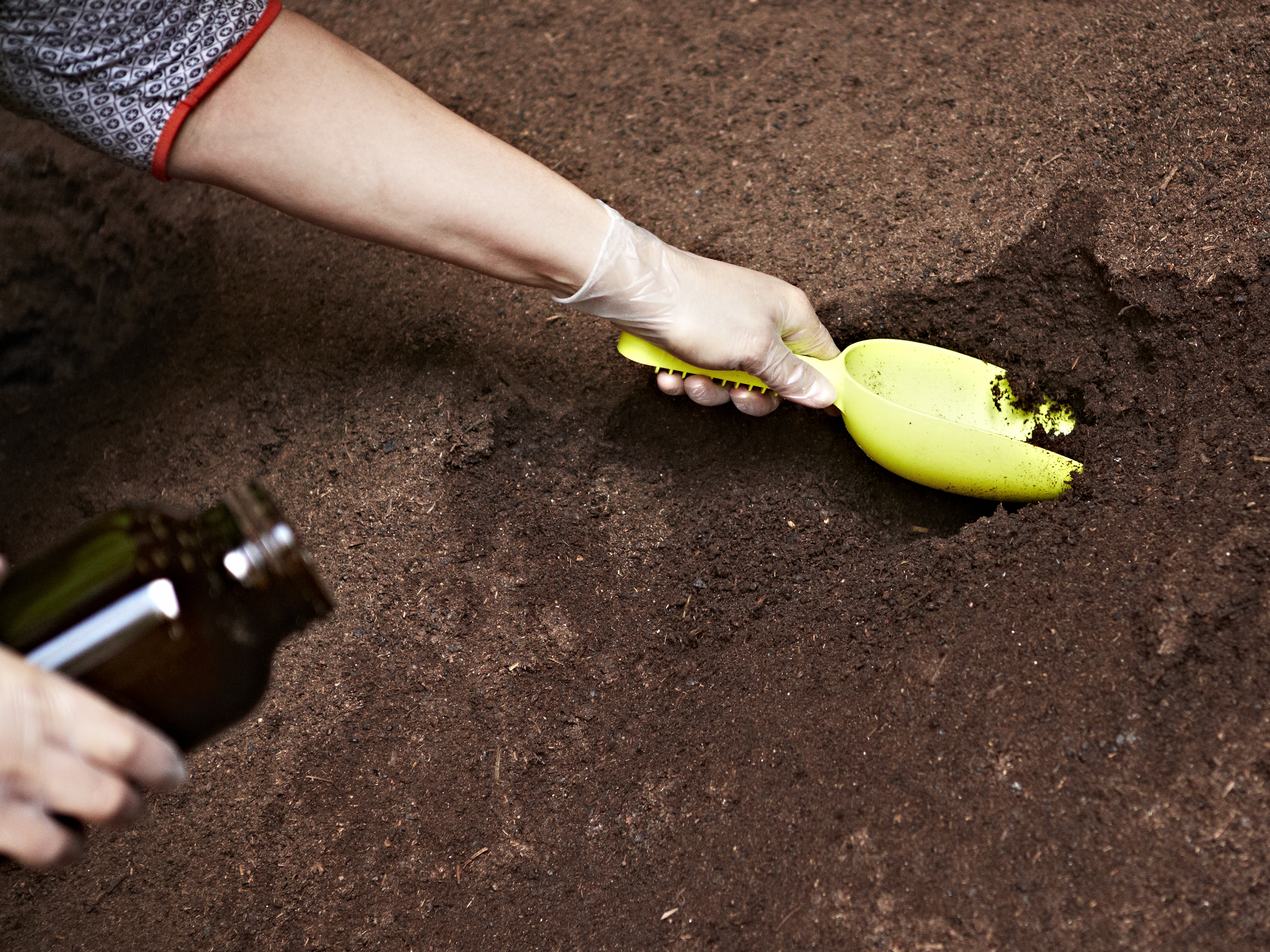
An organic amendment feeds the soil rather than the vine. It supplies stable organic matter that rebuilds humus, improves structure and water reserve, and increases the soil’s ability to hold nutrients (its CEC). It is often the first lever in viticulture: the organic matter content of vineyard soils usually ranges from 0.5 to 2.5%, against 2.9% on average in arable land.
Choose an amendment with a high ISMO (the organic matter stability index, i.e. the share that will become humus) and a moderate C/N ratio, so as not to cause nitrogen hunger. Apply it after harvest, on well-drained soil, lightly incorporated: for our Humiflor® amendments, 1 to 2 t/ha for maintenance and 3 to 5 t/ha at planting.
Which fertilizer for vines?
For vines, we recommend an organo-mineral fertilizer. Its organic part releases nitrogen gradually, at the pace of soil life; its mineral part makes potash and magnesium quickly available. Applied at budbreak, it has time to mineralize and be available at flowering.
The right NPK comes from the soil analysis. For maintenance, a balanced formula with magnesium, such as 6-4-6 + 2 MgO; for a vine lacking vigour, concentrated organic nitrogen; for ripening, a formula rich in potash and magnesium, such as 4-7-10 + 3 MgO. Phosphorus is rarely limiting in vineyards. Magnesium does matter: excess potash hinders its uptake (K/Mg antagonism).
In organic viticulture, the logic is the same with fertilizers approved for organic farming, as is 93% of our range.
We recognize their genuine expertise and quality products, which have helped us grow our fertilization business.
 Ax’VigneDistributor, Sancerre
Certifications and commitments





Vine fertilizer: your questions
Our technical team answers the questions winegrowers ask us most often.
What is the best fertilizer for vines?
The best fertilizer for vines is the one that corrects what your soil analysis shows: there is no universal formula. In most vineyards, an organic amendment in autumn and an organo-mineral fertilizer with magnesium at budbreak cover most needs.
When should you fertilize vines?
At budbreak, in March-April: the organo-mineral fertilizer then has time to mineralize before flowering, when the vine starts taking up nitrogen from the soil. The organic amendment is applied after harvest, from October to mid-December.
When should an organic amendment be applied to vines?
After harvest, from October to mid-December (before 15 December in nitrate vulnerable zones), on well-drained soil. Winter gives soil life time to transform the organic matter before the vines restart.
Which fertilizer for organic vineyards?
An organic or organo-mineral fertilizer approved for organic farming, applied at budbreak after an autumn organic amendment. 93% of the Germiflor range is approved for organic farming, including AB’Flor® 6-4-6 V + 2 MgO SE, which is 100% plant-based.
Which NPK should you choose for vines?
Vines mainly need nitrogen, potash and magnesium; phosphorus is rarely limiting. For maintenance, a balanced formula with magnesium, such as 6-4-6 + 2 MgO, is suitable; for ripening, a formula rich in potash and magnesium, such as 4-7-10 + 3 MgO.
How much fertilizer should you apply to vines?
The rate is calculated from your target yield and your soil analysis. A common benchmark is 0.6 kg of nitrogen per hectolitre produced, that is 30 kg/ha for 50 hl/ha. Our technical team turns this need into a product rate.
Should fertilizer applications be split?
Yes, when vigour or analysis justifies it: a second application before flowering avoids excess nitrogen early in the season and matches nutrition to the vine’s actual crop load.
Is a foliar fertilizer useful on vines?
As a complement, yes, to quickly correct a deficiency during the season, in magnesium or nitrogen for example. It does not replace soil application. We also offer a range of liquid fertilizers, including foliar formulas: ask us which one suits your vines.
Does Germiflor lend fertilizer spreaders for vineyards?
Yes, from the south of France up to the Loire Valley: with the purchase of our fertilizers, we lend storage hoppers and spreaders, for vines and all other crops, through your distributor or your Germiflor sales representative. Contact our team for the conditions.
Who can help me draw up a fertilization plan?
Our technical team and our distributors, based on your soil analysis, your yield targets and your constraints (organic farming, nitrate vulnerable zone).
References (in French): COMIFER, fiche culture Vigne; IFV, Raisonnement de la fertilisation azotée en viticulture and Gestion de la matière organique des sols viticoles; Pyrénées-Orientales Chamber of Agriculture, Fertilisation d’entretien au sol en viticulture; French order of 30 January 2023 (national nitrates action programme); Germiflor Flandry trial, Limoux, 2011-2018; Germiflor product sheets.
Page written and approved by the Germiflor technical team, maker of organic and organo-mineral fertilizers since 1885 in Aussillon (Tarn, France). Updated on .
A question about your plots? Let’s talk with our technical team.