Pasture fertilizer: organic fertilization for grassland and hay meadows
Since 1885, Germiflor has been making organic amendments for hay meadows and pastures in Aussillon (Tarn, France). Our programme: an organic amendment in autumn or late winter to support soil life and the sward, then nitrogen at spring regrowth, around 200 degree-days. On grazed pasture, our 100% plant-based amendments need no waiting period before animals are turned back out. Those containing animal materials require 21 days.
Our solutions for grassland
Organic amendments made in the Tarn to maintain soil condition in hay meadows and pastures.
Which product suits your grassland?
| Your grassland | What it needs | Germiflor product |
|---|---|---|
| Continuous grazing, animals back on grass quickly | 100% plant-based amendment, no waiting period before grazing | Humiflor® Orvega®OM 61%, ISMO 52 · Organic, Vegan · NF U 44-051-9 |
| Soil that needs reviving, low biological activity | Plant-based compost rich in stable humus and micro-organisms | Humiflor® Mazor® n°7OM 42%, ISMO 77 · 1 billion micro-organisms/g · Organic, Vegan |
| Hay meadow, tired soil | Animal and plant-based amendment, low C/N ratio | Humiflor® Biomazor®OM 61%, ISMO 55, C/N 14 · Organic · 21-day waiting period |
| Clay soil, compacted or poorly drained | Amendment that flocculates and aerates the soil | Humiflor® Humomaze®Mazor® and wool · OM 59%, ISMO 52 · Organic · 21-day waiting period |
The application rate depends on your soil analysis, whether the field is cut or grazed, and the sward composition: our technical team sets it with you. For late-winter nitrogen, we also make custom formulas: see contract manufacturing.
 100% Vegan
HUMIFLOR® - ORVEGA® (VEGAN)
Maintains humus and bearing capacity, with no waiting period before grazing. OM 61%, ISMO 52.
See the product sheet 100% Vegan
HUMIFLOR® MAZOR® n°7
Stable humus (ISMO 77) and 1 billion micro-organisms per gram to revive the soil.
See the product sheet
HUMIFLOR® BIOMAZOR®
Revives biological activity in hay meadows. 21-day waiting period before grazing.
See the product sheet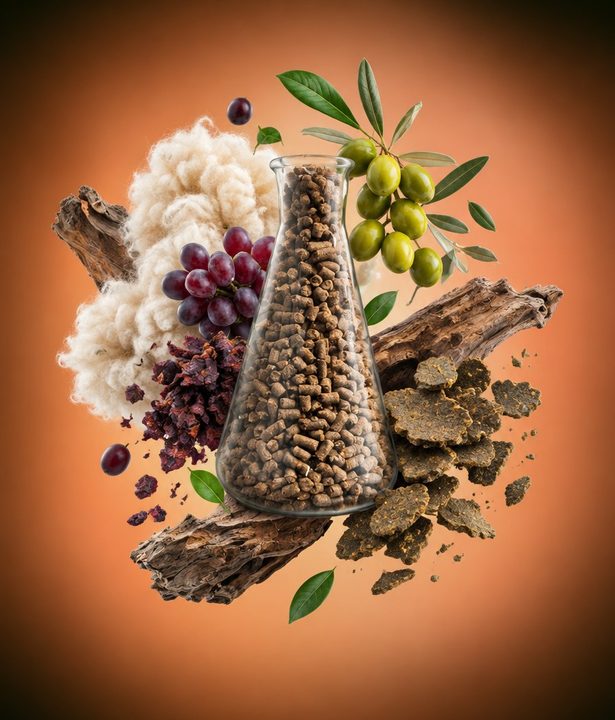
HUMIFLOR® HUMOMAZE®
Flocculates and aerates compacted clay soils. 21-day waiting period before grazing.
See the product sheet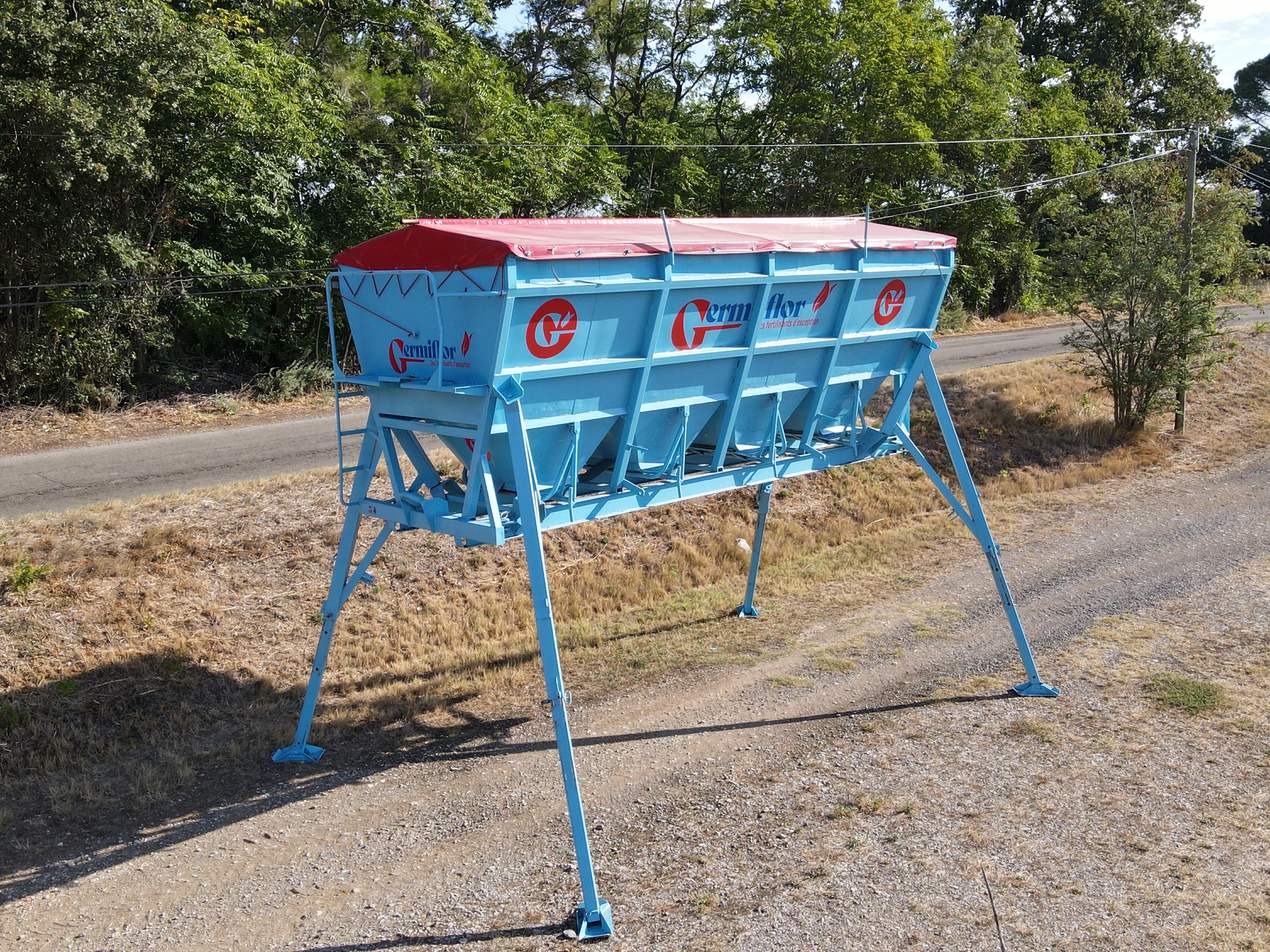
Delivery and equipment
Storage hoppers and a fertilizer spreader for your grassland
From the south of France up to the Loire Valley, buying our fertilizers comes with equipment on loan, through your distributor or your Germiflor sales representative: a storage hopper installed on your farm and a spreader suited to your plots. The loan applies to all crops.
- Storage hopper installed on your farm
- Five spreader models, including placement and double-coulter spreaders
- Loan available only with Germiflor fertilizer purchases
Germiflor know-how
A manufacturer working alongside livestock farmers
Our amendments are made at our Aussillon plant from our own compost, Mazor®. For compacted soils, we have brought back Mazamet’s “bourru”, wool mixed into compost: that is Humiflor® Humomaze®. Our technical team sets the rate with you based on the soil analysis, the sward and whether the field is cut or grazed.
Mazor® at the heart of our formulas
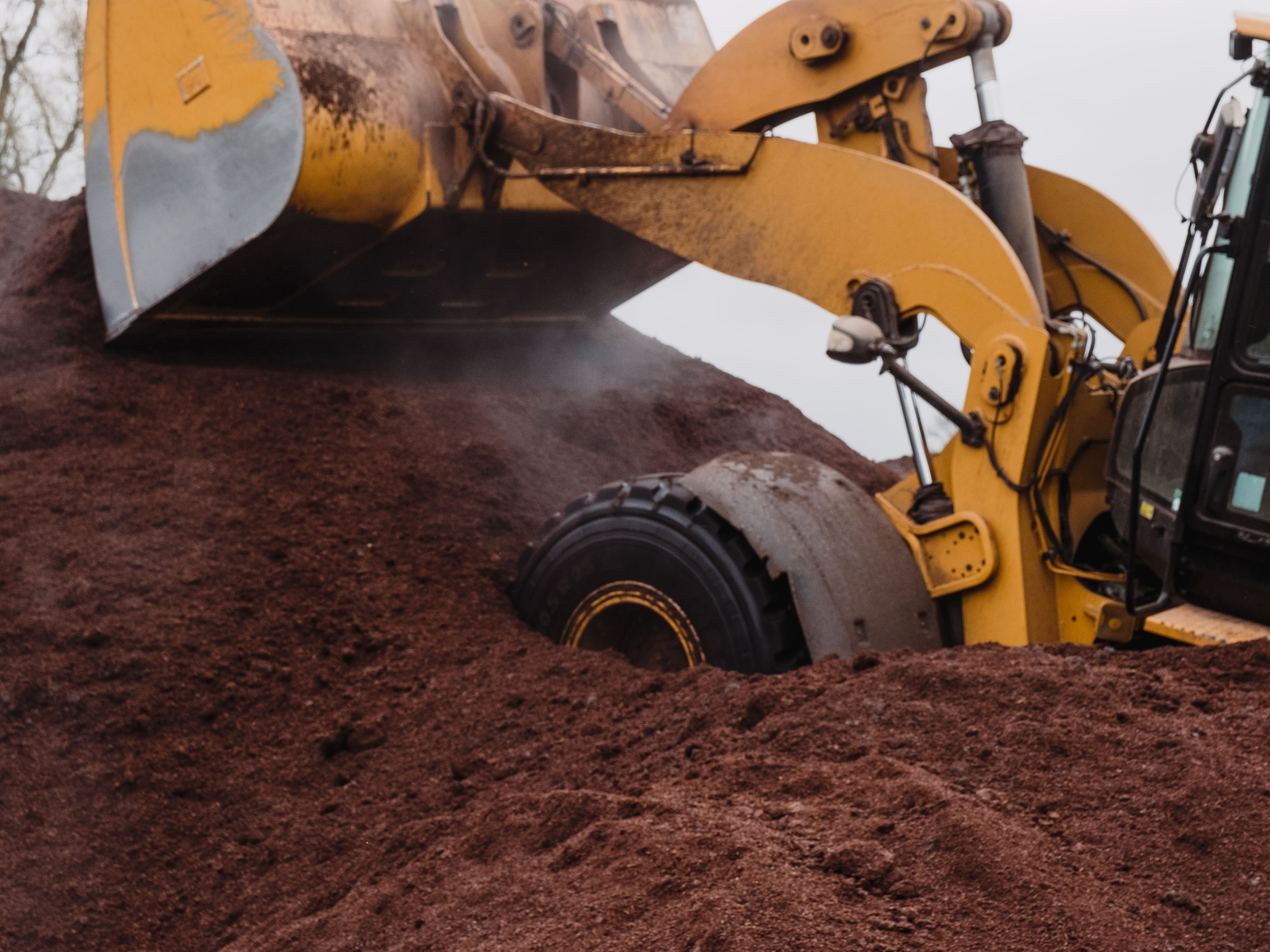
Our amendments and organo-mineral fertilizers are built on Mazor®, the result of seven months of controlled composting with the patented Cronops® process. Plant oilseed cakes, grape and olive pulp, coffee grounds and, depending on the formula, sterilized animal materials are transformed: carbon is stabilized, the C/N ratio falls, pathogens are eliminated and the microflora develops. That is what sets a composted material apart from the same material in its raw state.
Patented Cronops® process · FR2103847
- 7 months of controlled composting
- 1 billion micro-organisms per gram
- The basis of our amendments and organo-mineral fertilizers
On video
Mazor® and the Académie des Germis on video
How our compost is made, and the key concepts of fertilization explained by the Germis. All our videos, in French, are on our YouTube channel.


Grassland fertilization: our three-step programme
An organic amendment in autumn or late winter, nitrogen at spring regrowth, adjustments after the first cut: three steps timed to grass growth.
- 01Soil supportAutumn or late winterOn firm soil
An organic amendment to maintain humus, bearing capacity and soil life. Apply it when the soil can carry machinery without being compacted.
- 02NutritionFebruary to MarchAround 200 degree-days
First nitrogen application when accumulated temperatures since 1 January reach 200 degree-days (T-Sum 200, base 0°C), on grass-dominated swards.
- 03AdjustmentsAfter the first cutOr the first grazing
Above 100 kg N/ha, split the nitrogen: a second dressing just after the first cut. Overseed any thin patches.
On grazed fields, allow for the regulatory waiting period between spreading and turning animals back out: see below.
Nitrates Directive: in a nitrate vulnerable zone, follow the spreading calendar and the limits set by your regional action programme.

The Germis’ tip
Never spread uncomposted poultry droppings or manure on grassland: the risk of botulism in livestock is real. Use composted materials instead, and always check the waiting period before turning animals back out.
Germi and Germinette, the Germiflor mascots
What grassland needs
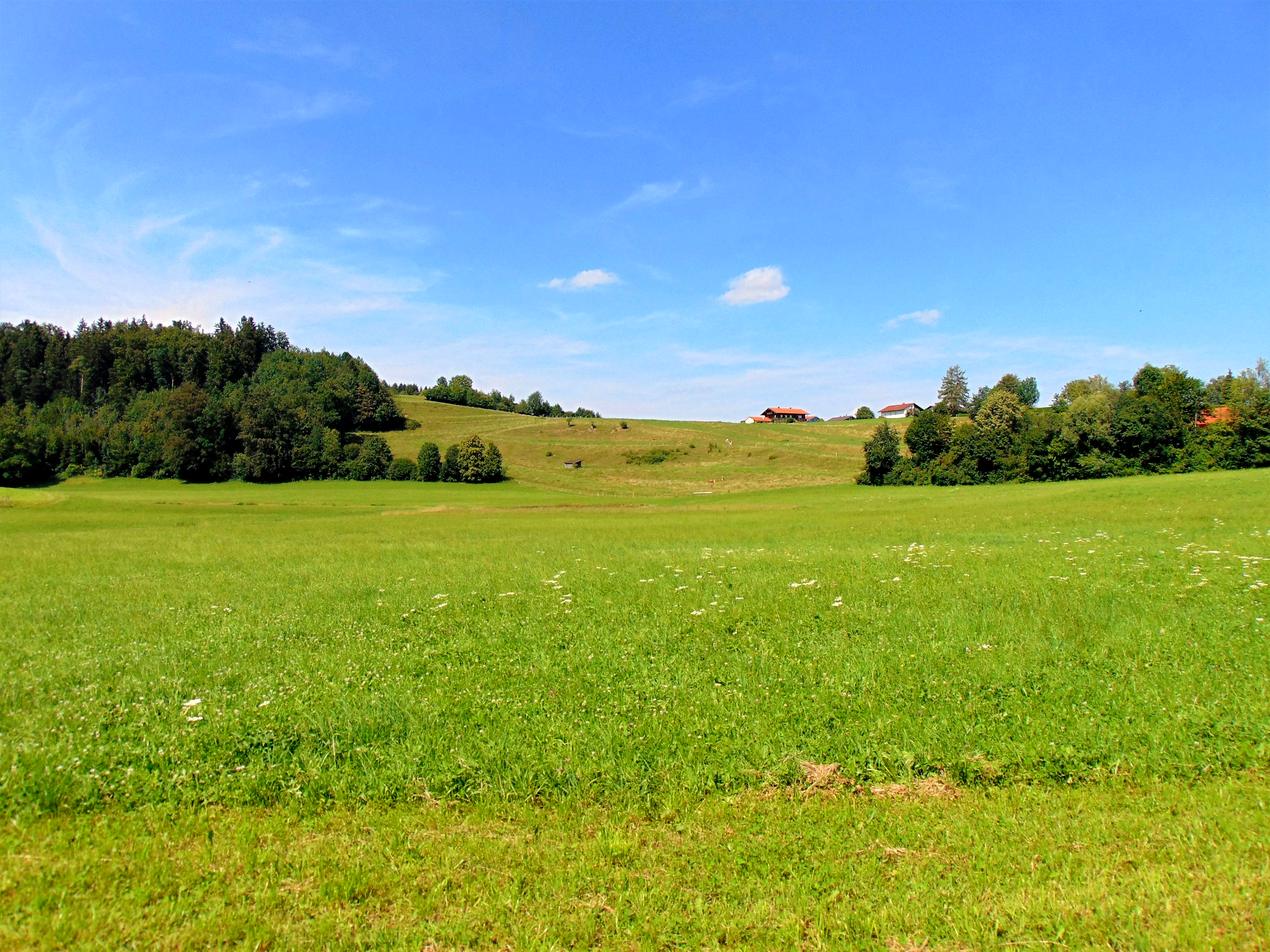
It all depends on how the grassland is used. On grazed fields, a good share of the nutrients returns to the soil in dung and urine; on cut fields, everything leaves with the hay or silage. That is why hay meadows have the highest phosphorus and potash requirements. Legumes grown for cutting (lucerne and red clover) remove particularly large amounts of potash.
Nitrogen, by contrast, is planned according to sward composition. Legume-rich grassland fixes part of its own nitrogen, while a grass sward relies more on applied nitrogen. On a multi-species sward, skip nitrogen in the first year so that the legumes establish better.
Soil remains the foundation: stable organic matter maintains structure, bearing capacity in spring and earthworm activity. That is why our programme always follows the same order: soil support, nutrition, adjustments.
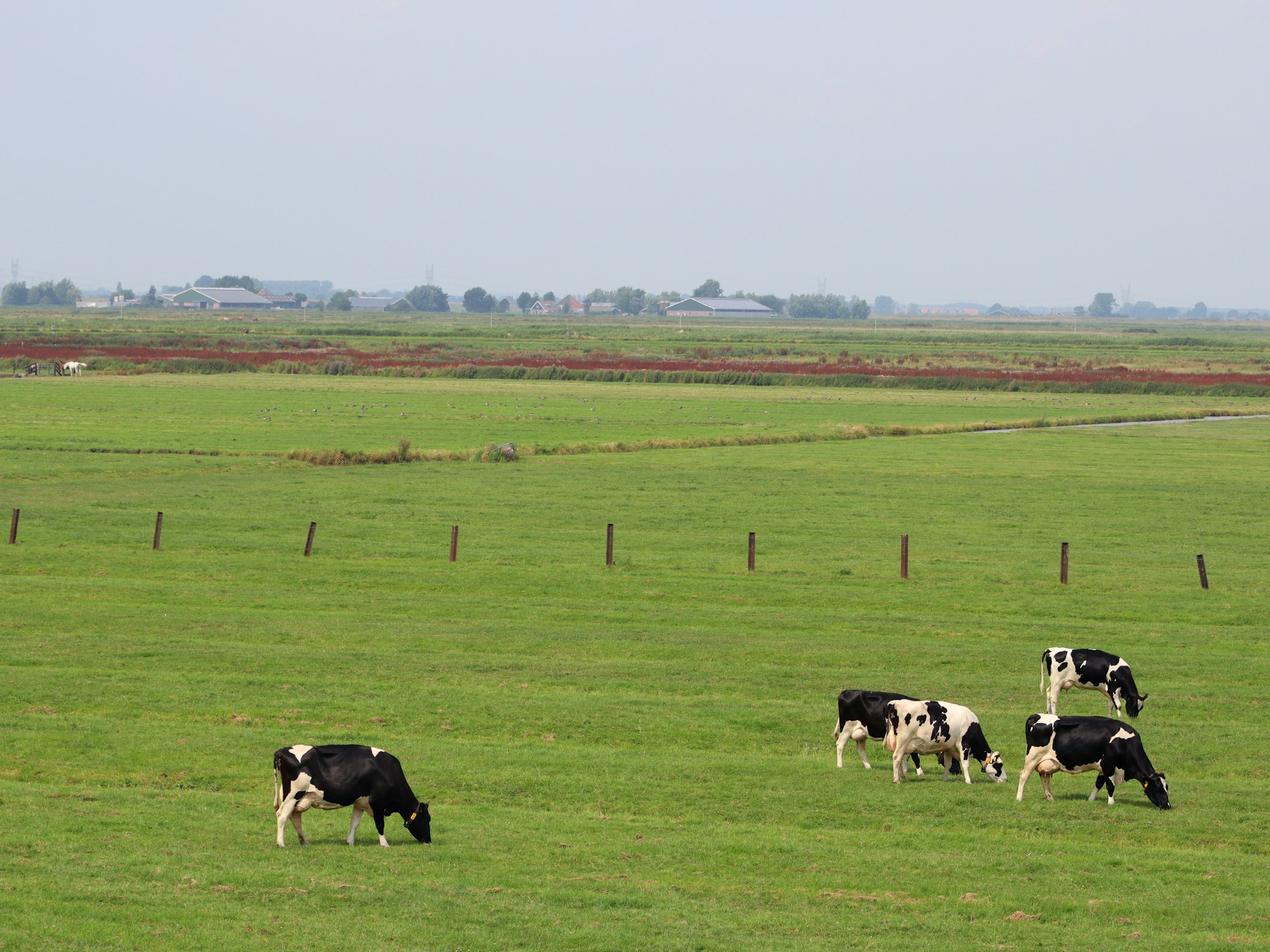
Grazing: how long to wait before turning animals back out
EU Regulation (EC) No 1069/2009 governs the use of organic fertilizers and amendments containing animal by-products other than manure: grass may not be grazed or cut for animal feed until at least 21 days after application. This waiting period is given on the relevant product sheets, such as those for Humiflor® Biomazor® and Humiflor® Humomaze®.
Our 100% plant-based amendments, Humiflor® Orvega® and Humiflor® Mazor® n°7, contain no animal materials, so the waiting period does not apply. They are the simplest choice for continuously grazed pasture.
As a precaution, we do not recommend any of our products containing castor cake for grassland or pasture, whatever the waiting period.
- Orvega® and Mazor® n°7: no waiting period, 100% plant-based
- Biomazor® and Humomaze®: 21 days before grazing or cutting
- No castor-based products on grassland
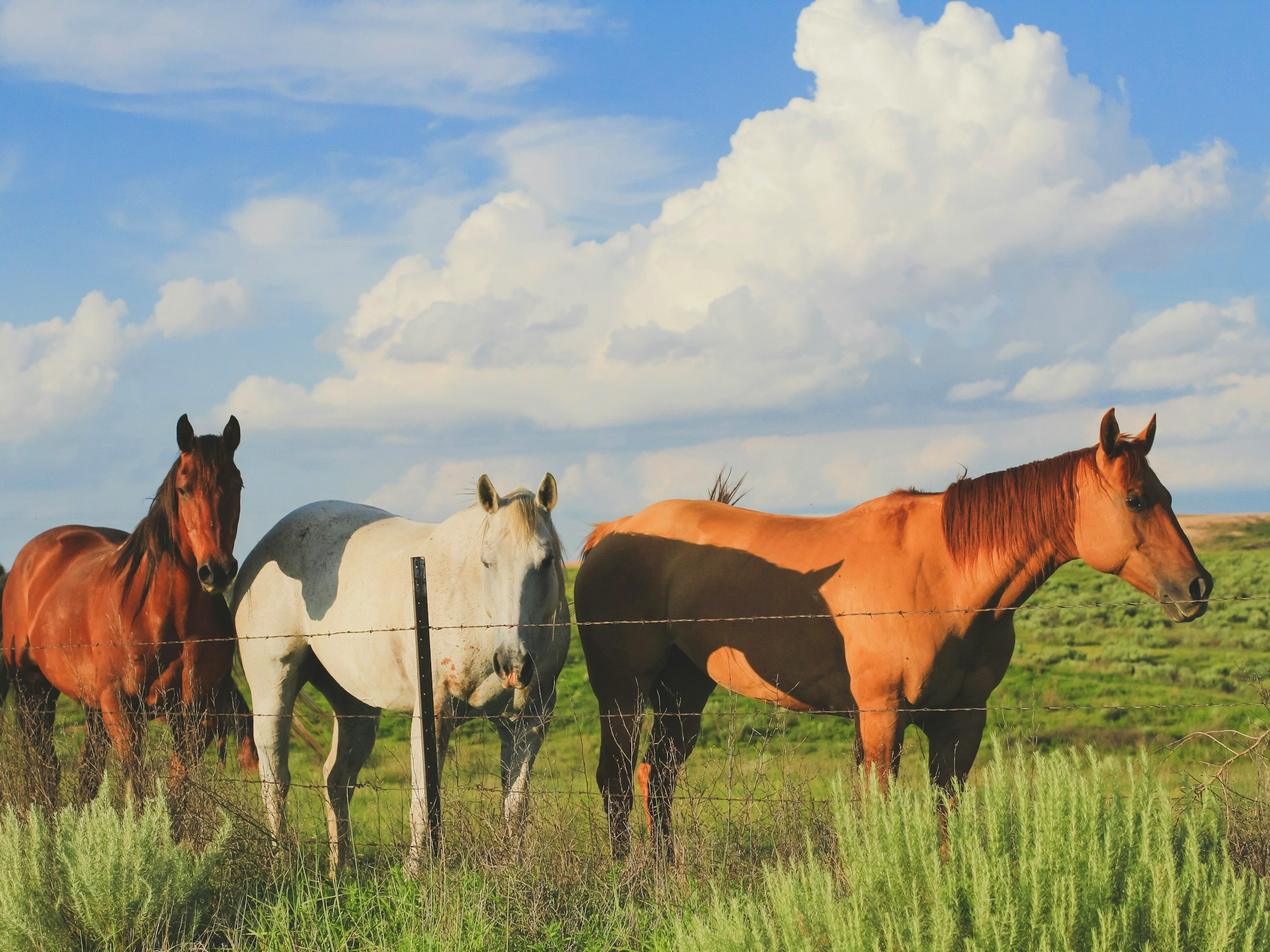
Horse paddocks: our advice
Horses graze close, poach wet areas and leave ungrazed patches, so a horse paddock compacts and thins out faster than a cattle pasture. The priority is therefore soil structure and overseeding rather than nitrogen.
A 100% plant-based amendment such as Humiflor® Orvega® maintains humus and bearing capacity, with no waiting period before the horses go back out. Follow up by overseeding damaged areas, and rotate paddocks to give the grass time to regrow.
For many years, we have found a true partner in GERMIFLOR, attentive to what our markets expect, both in product quality and in the agronomic and logistics answers it provides.
 ArterrisOccitanie
Certifications and commitments





Pasture fertilizer: your questions
Our technical team’s answers to the questions livestock farmers ask us most often.
What fertilizer should I use on grassland?
An organic amendment to maintain the soil and the sward, then nitrogen at spring regrowth on grass-dominated swards. On grazed pasture, a 100% plant-based amendment is the better choice, with no waiting period before animals are turned back out.
When should I fertilize pasture?
Apply the first nitrogen when accumulated temperatures since 1 January reach 200 degree-days, usually between February and March depending on the region. Apply the organic amendment in autumn or late winter, once the soil can carry machinery.
How long after spreading fertilizer can animals graze again?
At least 21 days for a fertilizer or amendment containing animal by-products other than manure (Regulation (EC) No 1069/2009). The rule does not apply to our 100% plant-based amendments, Orvega® and Mazor® n°7.
What fertilizer should I use on a horse paddock?
A 100% plant-based amendment such as Humiflor® Orvega®, which maintains soil structure with no waiting period before the horses go back out. Avoid any product containing castor cake, which is toxic to animals.
How much fertilizer should I apply per hectare of grassland?
It depends on the soil analysis, the sward and whether the field is cut or grazed. For nitrogen, split anything above 100 kg N/ha: one dressing at 200 degree-days and a second after the first cut.
Should I fertilize permanent grassland?
Yes, especially if it is cut: hay removes the phosphorus and potash that grazing partly returns to the soil. Regular organic amendments also maintain soil humus and bearing capacity.
Can I spread poultry droppings on grassland?
No, not raw: uncomposted poultry manure and droppings must never be spread on grassland because of the risk of botulism in livestock.
Does grassland with legumes need nitrogen?
Little or none: legumes fix part of their nitrogen from the air. On a multi-species sward, skip nitrogen in the first year. Legumes do, however, need potash, especially when the field is cut.
When should I overseed pasture?
In late summer or early autumn, when the soil is still warm and the rain returns, or in spring once the soil has warmed up. An organic amendment applied before overseeding helps the seedlings establish.
Does Germiflor lend fertilizer spreaders for grassland?
Yes, from the south of France up to the Loire Valley: when you buy our products, we lend storage hoppers and spreaders through your distributor or your Germiflor sales representative.
References: Regulation (EC) No 1069/2009, Article 11; Arvalis, the 200 degree-day rule, as presented by Corteva; Pays de la Loire Chamber of Agriculture, La fertilisation organique se raisonne aussi sur les prairies (2024); Germiflor product sheets.
Page written and approved by the Germiflor technical team, maker of organic and organo-mineral fertilizers since 1885 in Aussillon (Tarn, France). Updated on .
Need to revive your grassland? Talk it over with our technical team.