Orchard fertilizer: fruit trees, olive trees and citrus
Germiflor has been making organic amendments and organic and organo-mineral fertilizers in Aussillon (Tarn, France) since 1885, for growers of pome and stone fruit, olives and citrus. Our programme has three stages: an organic amendment in autumn to build up the orchard’s humus, a potash-rich organo-mineral fertilizer in late winter, and a top-up from flowering to fruit set. For organic and conventional orchards alike, with advice from our technical team.
Our solutions for fruit growing
Organic amendments for autumn, fertilizers for late winter and spring: formulas made in the Tarn for orchards, olive groves and citrus. Choose them to match your orchard’s situation.
The right product for each situation
| Orchard situation | What it needs | Germiflor product |
|---|---|---|
| Soil low in organic matter, low water-holding capacity | High-ISMO plant-based amendment, applied in autumn | Humiflor® Germi’One®OM 55%, ISMO 59, C/N 19 · Organic, Vegan · 1 to 2 t/ha |
| Compacted, poorly aerated clay soil | Amendment that flocculates and aerates the soil | Humiflor® Humomaze®Mazor® and wool · OM 59%, ISMO 52, C/N 15 · Organic · 1 to 2 t/ha |
| Planting an orchard | Base organic amendment, planting mix in the hole, then phosphorus | Germi’One® or Biomazor® at 3 to 5 t/ha, Germiplant® (1 to 2 kg per tree), then AB’Flor® 8-10-2 S8-10-2 approved for organic farming |
| Maintaining an orchard, olive grove or citrus grove | Balanced organo-mineral fertilizer with magnesium and sulphur | AB’Flor® 7-5-7 S + 2 MgO SENPK 7-5-7 + 2 MgO + sulphur · Organic · 1,000 to 1,200 kg/ha |
| Goal: fruit size, colour and storage life | Potash-rich fertilizer | AB’Flor® 5-3-9 V or Fructiflor® 4-7-10 SK + 3 MgO5-3-9 V approved for organic farming · Fructiflor not approved for organic farming |
| Lack of vigour confirmed by analysis | Targeted application of concentrated organic nitrogen | AB’Flor® 13 NOrganic fertilizer with 13% nitrogen · Organic · 700 to 1,000 kg/ha |
| Calcareous soil, iron chlorosis | Organo-mineral fertilizer with iron | Mikroflor Germifer® 3-2-2 + FeApproved for organic farming · 1,000 to 1,200 kg/ha |
Application rates are given on our product sheets. For fertilizers, the rate is calculated from the crop load and your soil analysis, and our technical team sets it with you. We also make formulas not shown on the website, as well as custom formulas (see contract manufacturing).
 100% Vegan
HUMIFLOR® GERMI’ONE®
Builds stable humus and improves the soil’s water-holding capacity. OM 55%, ISMO 59, C/N 19.
See the product sheet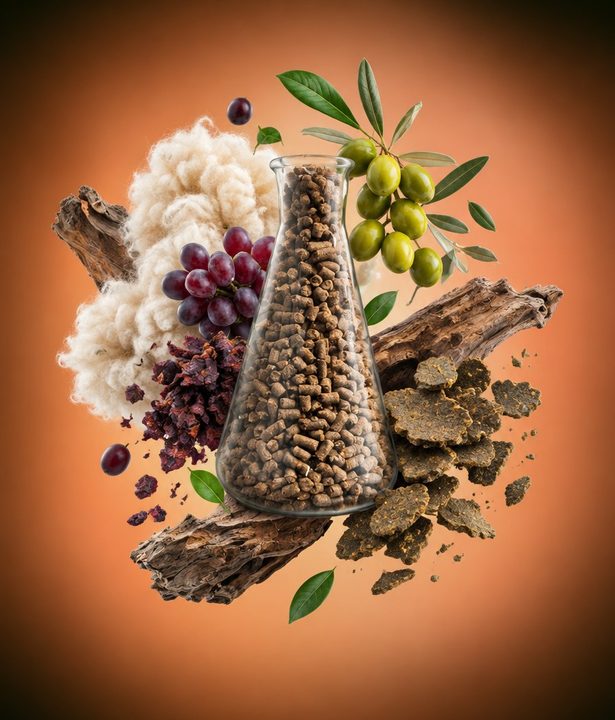
HUMIFLOR® HUMOMAZE®
Flocculates and aerates clay soils and supplies long-lasting organic nitrogen. OM 59%, ISMO 52.
See the product sheet
AB’FLOR® 7-5-7 S + 2 MgO SE
Balanced nutrition with magnesium and sulphur for orchards, olive trees and citrus.
See the product sheet
FRUCTIFLOR® - 4-7-10 SK + 3 MgO
Rich in potash and magnesium for fruit size, colour and storage life.
See the product sheet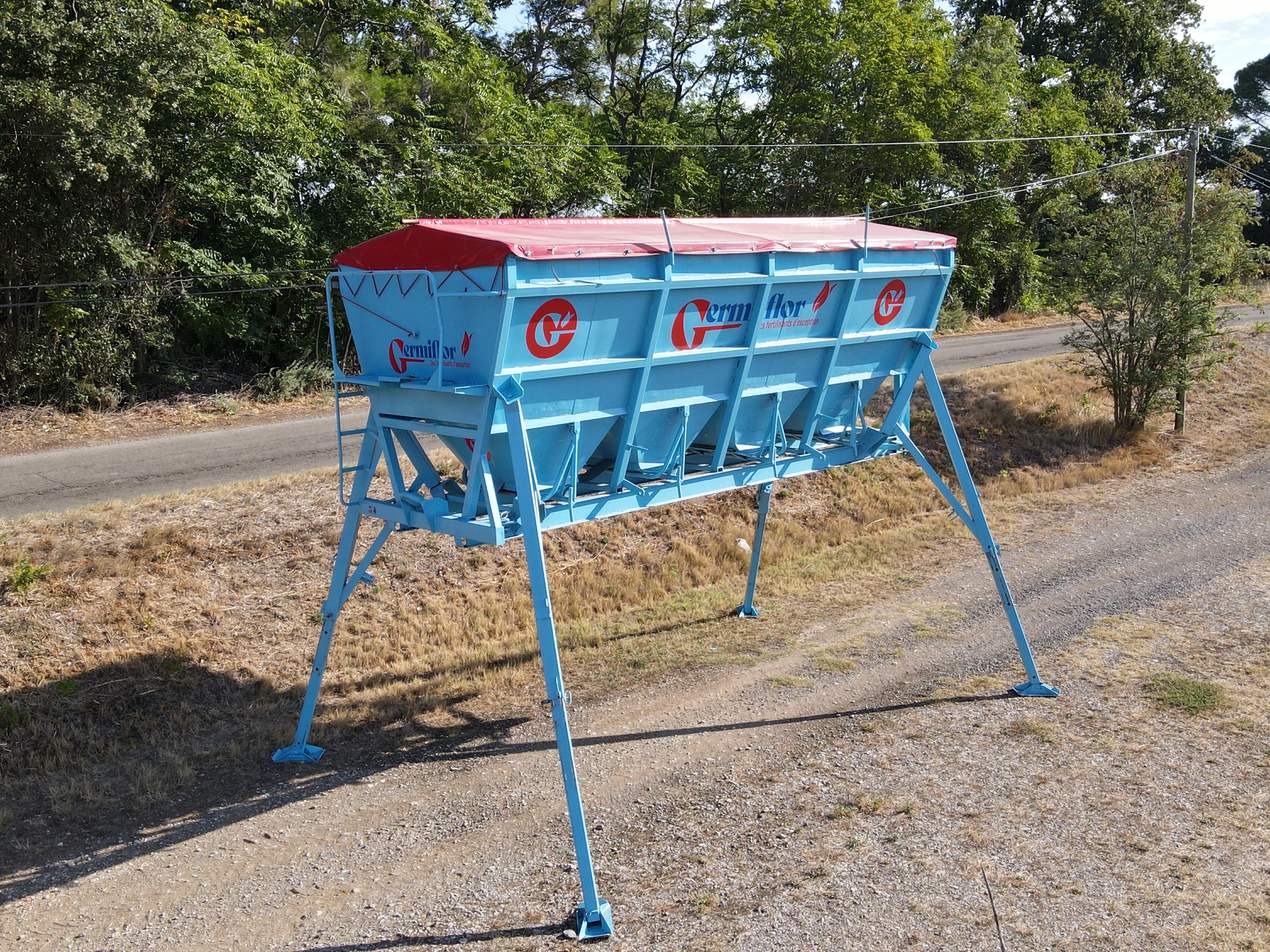
Delivery and equipment
Hoppers and fertilizer spreaders for your orchards
From the south of France up to the Loire Valley, buying our fertilizers comes with equipment on loan, through your distributor or your Germiflor sales representative: a storage hopper installed on your farm and a spreader suited to your plots. The loan applies to all crops.
- Storage hopper installed on your farm
- Five spreader models, including placement and double-coulter spreaders
- Loan available only with Germiflor fertilizer purchases
Germiflor know-how
A manufacturer working alongside fruit growers
Our fertilizers are made at our Aussillon factory from our own compost, Mazor®. Our technical team sets the rates with you based on your soil analysis and crop load. We deliver as far as Corsica, where citrus fertilizer ships from September.
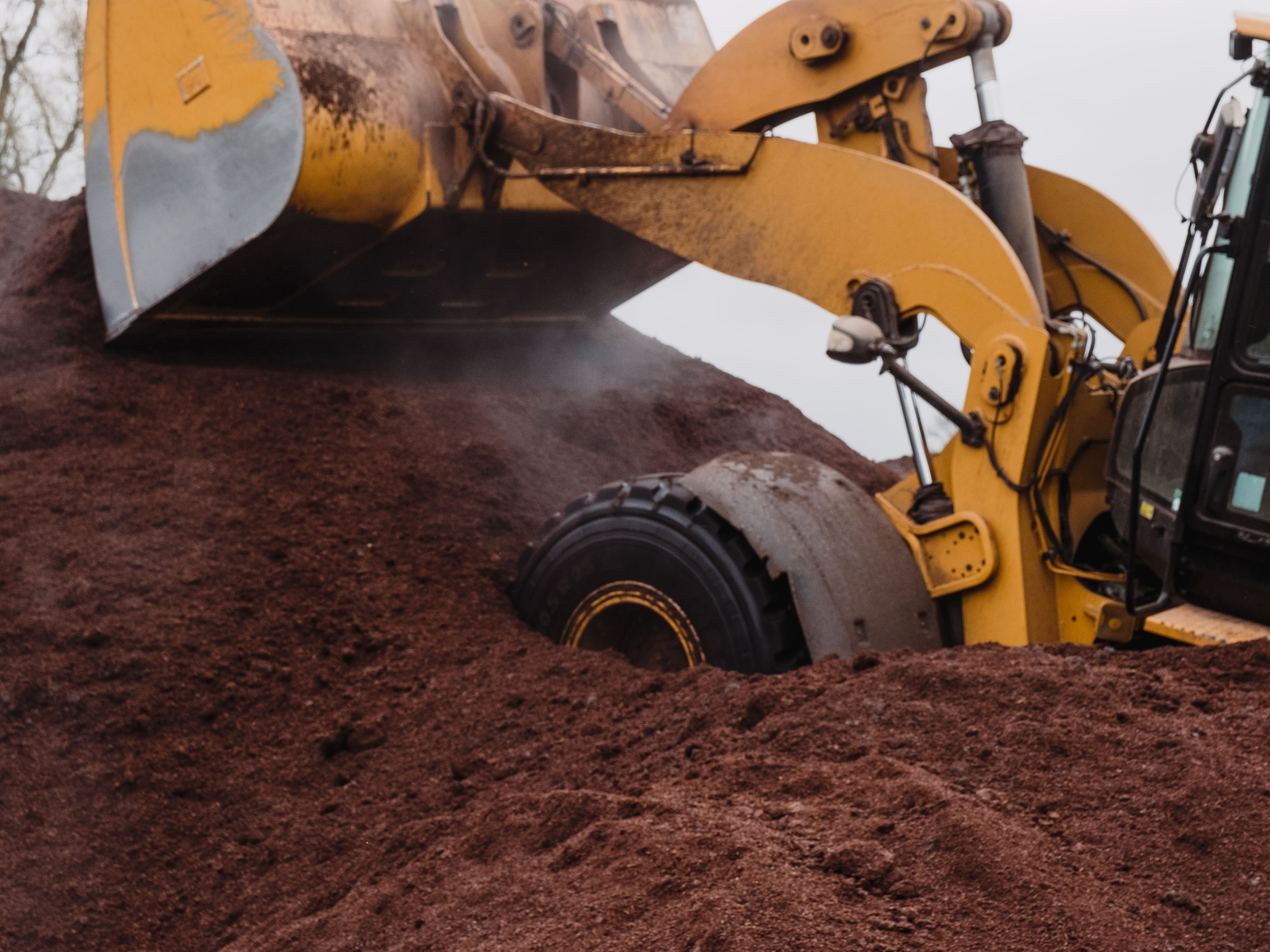
Mazor® at the heart of our formulas
Our amendments and organo-mineral fertilizers are built on Mazor®, the result of seven months of controlled composting with the patented Cronops® process. Plant oilseed cakes, grape and olive pulp, coffee grounds and, depending on the formula, sterilized animal materials are transformed: carbon is stabilized, the C/N ratio falls, pathogens are eliminated and the microflora develops. That is what sets a composted material apart from the same material in its raw state.
Patented Cronops® process · FR2103847
- 7 months of controlled composting
- 1 billion micro-organisms per gram
- The basis of our amendments and organo-mineral fertilizers
On video
Mazor® and the Académie des Germis on video
How our compost is made, and the key concepts of fertilization explained by the Germis. All our videos, in French, are on our YouTube channel.


Fertilizing fruit trees: our three-stage programme
Organic amendment after harvest, fertilizer before budbreak, a top-up from flowering to fruit set: three stages timed to the orchard’s peaks in nitrogen demand.
- 01Soil supportOctober to NovemberAfter harvest
Organic amendment, applied once the soil has drained, then lightly incorporated. A small nitrogen application, 15 to 20% of the total, helps the tree build up its reserves for spring.
- 02NutritionFebruary to MarchBefore budbreak
Slow-release organic or organo-mineral fertilizer: 20 to 25% of the year’s nitrogen, for good-quality flower buds.
- 03AdjustmentsApril to JuneFrom flowering to fruit set
The remaining nitrogen, about 60%, split according to crop load. Potash and magnesium support fruit growth.
Our technical team adjusts this split to your orchard’s crop load. In a nitrate vulnerable zone, the fertilization plan must be recorded no later than the start of spring growth.
Apple trees: avoid late nitrogen applications, which encourage bitter pit and impair fruit colour. In a nitrate vulnerable zone, follow the spreading calendar set by your nitrates action programme.

The Germis’ tip
In orchards, a soil analysis is not always enough. A summer leaf analysis reveals potash, magnesium or iron deficiency before the fruit suffers. On calcareous soil, young yellow leaves with green veins often signal iron chlorosis: the remedy is then an application of iron, not a nitrogen fertilizer.
Germi and Germinette, the Germiflor mascots
What an orchard needs
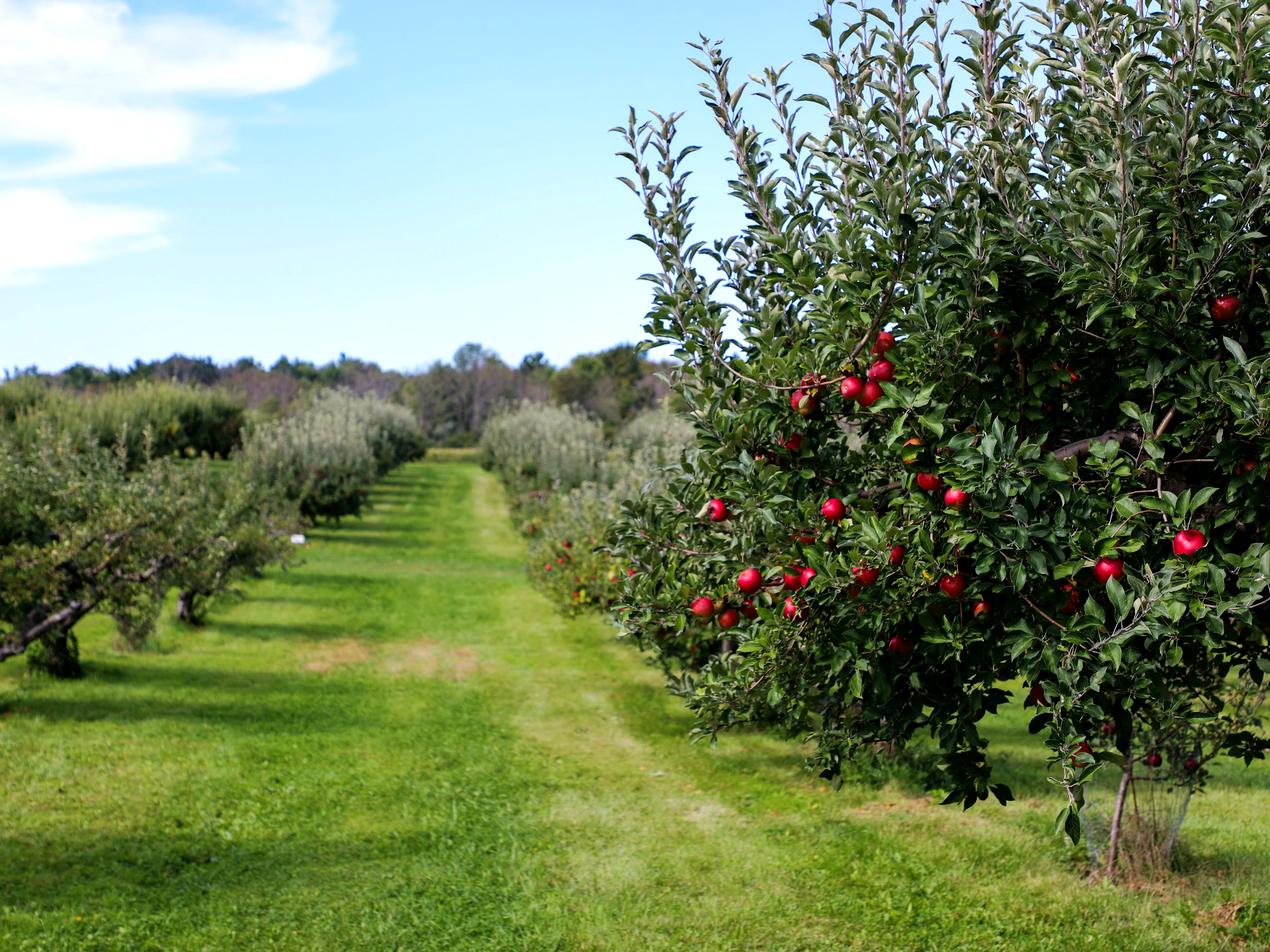
An orchard removes few mineral nutrients compared with an annual crop. Per tonne of fruit harvested, allow 1.2 to 1.6 kg of nitrogen for apples, 3 to 4 kg for apricots and 4 to 5.3 kg for cherries. Potash removal is higher: 2 to 2.5 kg of K2O per tonne of apples, 5 to 6 kg per tonne of apricots. Potash drives fruit size, colour and firmness.
Meanwhile, the soil loses 1 to 2 tonnes of humus per hectare every year through mineralization. Without regular inputs of organic matter, soil structure deteriorates, water infiltration declines and roots explore a smaller volume of soil. Fertilizer alone does not make up for this loss.
That is why our programme always follows the same order: soil support, nutrition, adjustments.
Olive tree fertilizer: our programme
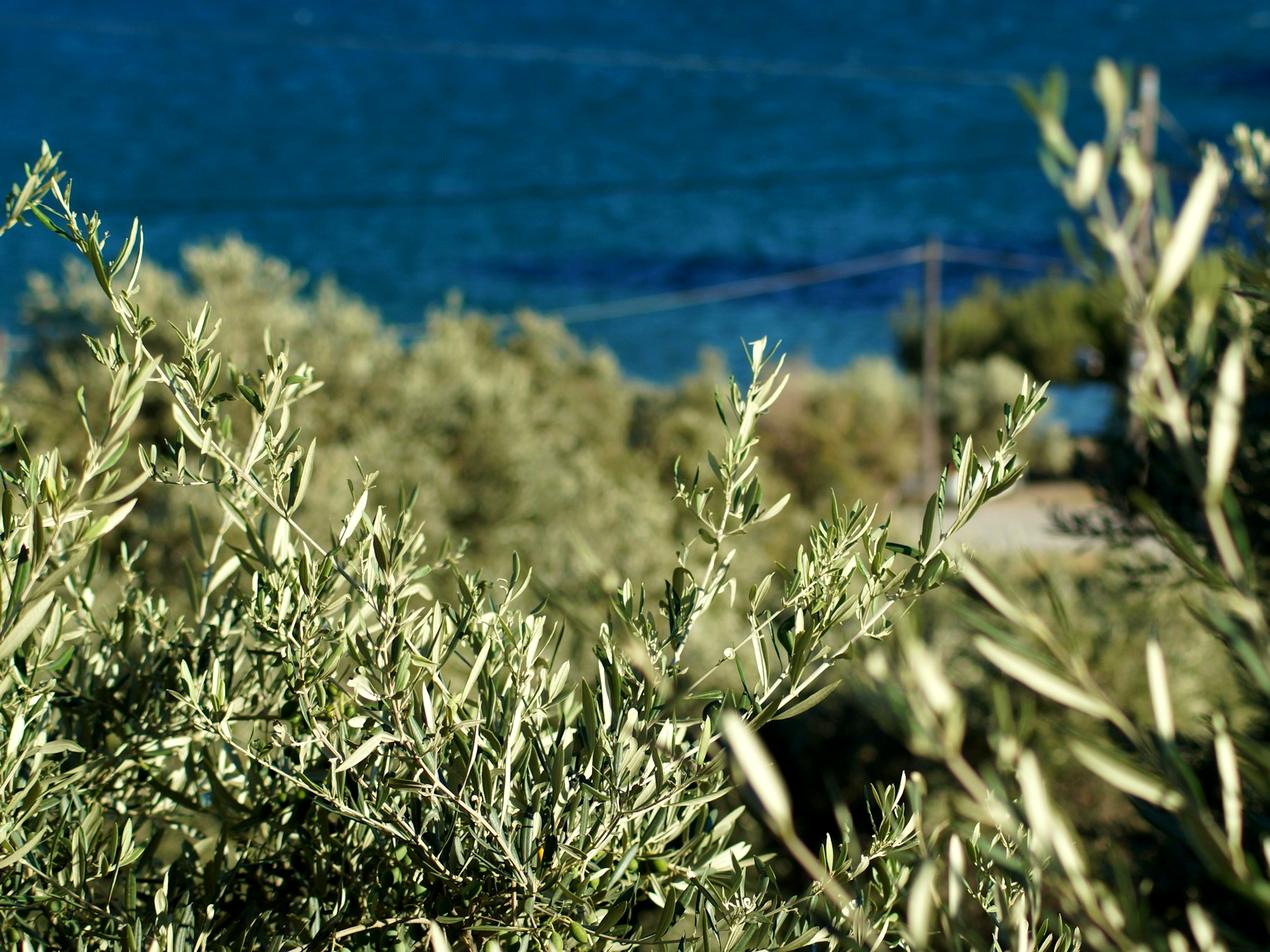
Olive trees need nitrogen from late winter until fruit set in late May or early June. Organic nitrogen fertilizers are applied in late February or early March; in irrigated groves, a second application can be made in summer. Potash reserves are built up from autumn onwards for the next crop.
Requirements depend on yield. For 2 to 3 tonnes of olives per hectare, a typical rain-fed yield, allow 30 to 50 kg of nitrogen, 15 to 25 kg of phosphorus, 50 to 60 kg of potash and 15 kg of MgO per hectare per year. For 5 to 6 tonnes, allow 70 to 90 kg of nitrogen and 80 to 100 kg of potash.
For olive grove maintenance, we recommend a balanced organo-mineral fertilizer with magnesium and sulphur, such as AB’Flor® 7-5-7 S + 2 MgO SE, preceded by an organic amendment if the soil is poor. For a potted or garden olive tree, our Fruitier Marcel le Jardinier fertilizer is formulated for home gardeners.
Citrus fertilizer: our advice
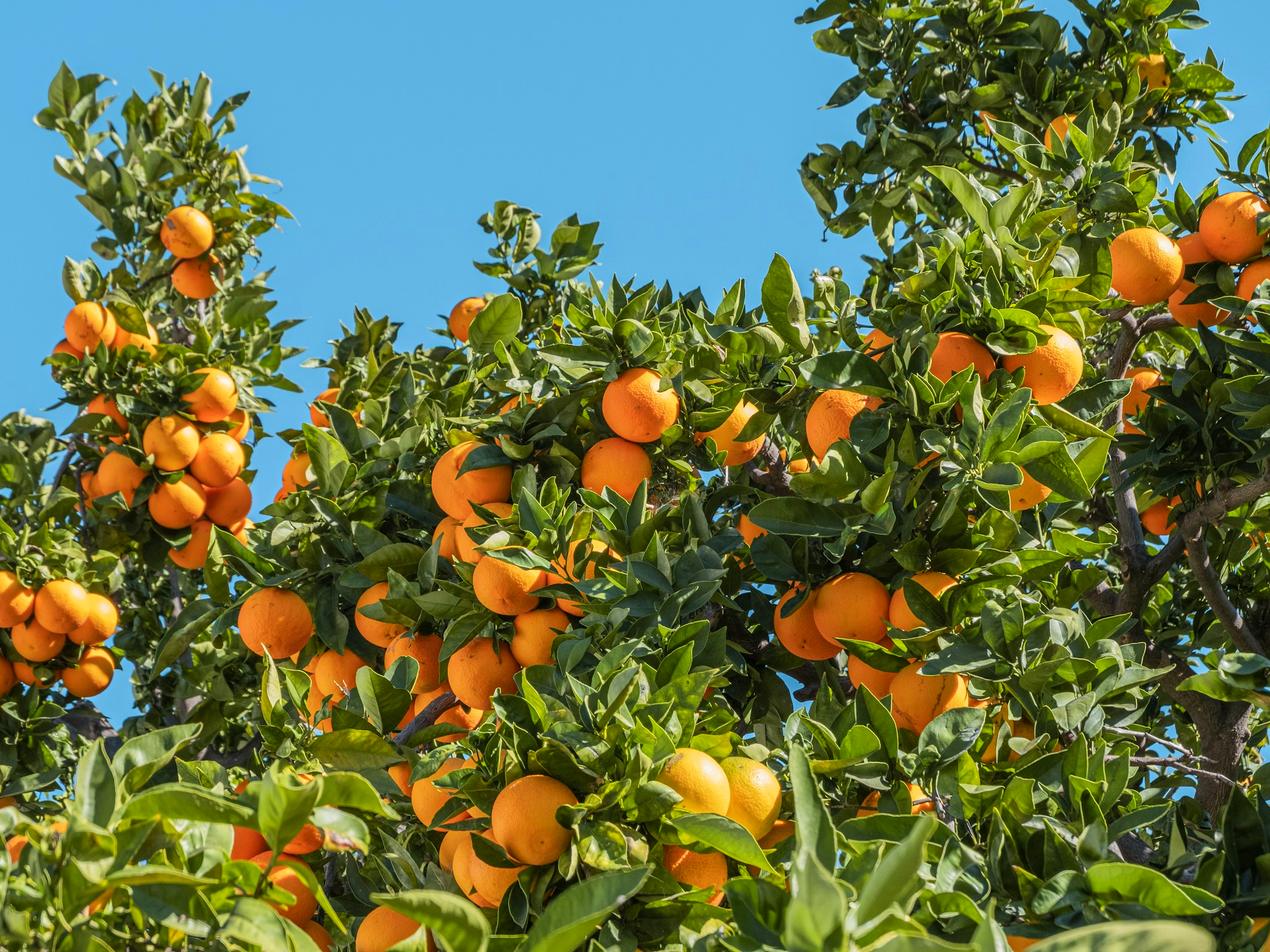
Clementine, orange and lemon trees need more nitrogen and potash than olive trees, in split applications from late winter to early summer. Magnesium matters too, as excess potash hinders its uptake. We ship citrus fertilizer to Corsica from September (AB’Flor® 13 N, for example): this autumn application prepares the trees for the next flowering.
On calcareous soil, citrus trees are prone to iron chlorosis. An organo-mineral fertilizer enriched with iron, such as Mikroflor Germifer® 3-2-2 + Fe, prevents the deficiency. Concentrated organic nitrogen, such as AB’Flor® 13 N, revives a tree that lacks vigour.
Planting an orchard: it all comes down to preparation
Everything is decided before the trees go in. A base organic amendment (3 to 5 t/ha for our Humiflor® amendments) improves the structure of the soil the roots will colonize. In the planting hole, Germiplant®, our planting mix, helps the tree establish at 1 to 2 kg per tree.
Next come phosphorus for root development, with AB’Flor® 8-10-2 S, and nitrogen in split applications. In the first year, limit a young orchard to 40 to 60 kg of nitrogen per hectare depending on vigour, applied in doses of 15 to 30 kg.
At OXYANE, we value our business relationship with GERMIFLOR. It is built on trust earned over many years. The support GERMIFLOR provides to our teams brings real added value.
 Groupe OxyaneRhône-Alpes
Certifications and commitments





Fruit tree fertilizer: your questions
Our technical team answers fruit growers’ questions.
What is the best fertilizer for fruit trees?
The one that corrects what your soil and leaf analyses show. In most orchards, an organic amendment in autumn and a potash-rich organo-mineral fertilizer with magnesium in late winter cover most needs.
When should I fertilize fruit trees?
In late winter before budbreak, then as a top-up from flowering to fruit set, plus a small application after harvest. Allow 20 to 25% of the nitrogen in late winter, about 60% in spring and 15 to 20% after harvest.
What fertilizer should I use for olive trees?
An organic or organo-mineral fertilizer with potash and magnesium, applied in late February or early March. For an olive grove, AB’Flor® 7-5-7 S + 2 MgO SE is suitable; for a garden olive tree, use Fruitier Marcel le Jardinier fertilizer.
How much fertilizer does an olive tree need?
For an olive grove producing 2 to 3 tonnes of olives per hectare, allow 30 to 50 kg of nitrogen and 50 to 60 kg of potash per hectare per year. For a garden olive tree, follow the rate given on the pack.
What fertilizer should I use for citrus trees?
An organo-mineral fertilizer rich in nitrogen and potash, applied in split doses from late winter to early summer. On calcareous soil, choose a formula with iron to prevent iron chlorosis.
What fertilizer should I use for apple trees?
An organo-mineral fertilizer with potash and magnesium in late winter, with no late nitrogen, which would encourage bitter pit. For a yield of 30 t/ha, the nitrogen requirement is about 36 to 48 kg per hectare.
How do you fertilize an orchard organically?
Use amendments and fertilizers approved for organic farming, as 93% of the Germiflor range is. Favour nitrogen-rich organic fertilizers (more than 5% N) and split applications, in February and then in May.
Do I need fertilizer when planting a fruit tree?
Yes, but above all a base organic amendment and a planting mix in the planting hole, such as Germiplant® at 1 to 2 kg per tree. Nitrogen comes later, in small split doses.
Why are my fruit tree leaves turning yellow?
Overall yellowing points to a lack of nitrogen. Young yellow leaves with green veins point to iron chlorosis, common on calcareous soil. Yellowing between the veins of older leaves points to magnesium deficiency. A leaf analysis settles the question.
Does Germiflor lend fertilizer spreaders for orchards?
Yes, from the south of France up to the Loire Valley. When you buy our fertilizers, we lend storage hoppers and spreaders through your distributor or your Germiflor sales representative.
References: PACA Chamber of Agriculture, Fertilisation en arboriculture and Fertilisation des oliviers (“Matières organiques” fact sheets, 2012); référentiel régional nitrates d’Occitanie, annexe Arboriculture (Occitanie regional nitrates reference, fruit growing annex, 2025); Germiflor product sheets.
Page written and approved by the Germiflor technical team, maker of organic and organo-mineral fertilizers since 1885 in Aussillon (Tarn, France). Updated on .
Planting or reviving an orchard? Talk it over with our technical team.